
Craft
Mar 28, 20265 min readCanon-Safe vs Canon-Gap vs AU-Leaning
Pick the wrong canon distance and you do twice the work: once writing the idea, once explaining why it still fits.
A character is not their superpower or historical costume. A character is a decision-making algorithm operating under crisis. Here is how to keep them intact.
By rin_hart · Editorial Policy
Alternate Universe (AU) storytelling is one of the most prolific creative playgrounds in modern fandom. Writers eagerly transplant high-fantasy paladins into sterile corporate boardrooms, take cynical cyberpunk hackers and place them in cozy seaside bakeries, or strip magical warriors of their spells to place them in modern high schools.
Yet a vast majority of AU projects collapse into a dispiriting failure state: the "Costume Party" trap. The name on the page belongs to a beloved canon figure, but their actions, voice, and choices resemble a completely generic original character. The setting was transplanted, but the soul was discarded.
In our foundational guide on canon-safe vs canon-gap vs AU-leaning frameworks, we mapped how far an idea can stray from source material before breaking reader trust. When venturing into heavy AU territory, you do not need to keep the world. You must, however, obey the Invariance Rule.
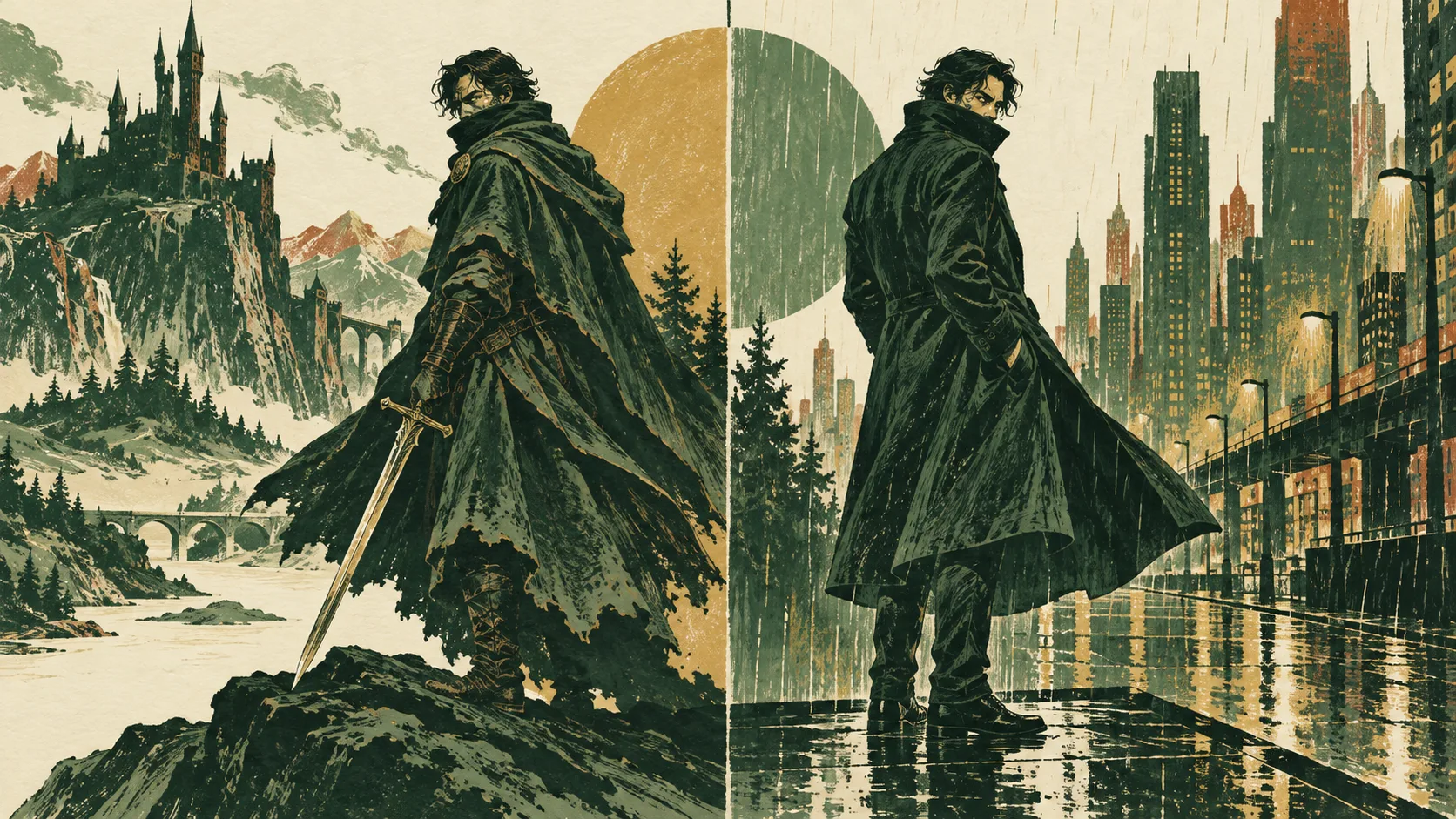
The Costume Party trap happens when a writer assumes that a character is defined by their external ornamentation—their title, their magical affinity, their weapons, or their catchphrases.
When you take away the dragon, the throne, or the lightsaber, what remains?
If the answer is "a handsome person who makes witty remarks," the character never possessed substantive psychological architecture to begin with. When stripped of their original universe, weak characterizations dissolve because the writer never understood what forces created their behavior in the first place.
Consider the failure modes of modern transplantation:
Craft in Practice: Pressure-Test Your Alternate Reality Never transplant characters into an alternate universe without defining what survives the transition. Use the what-if generator to explore radical premise shifts, divergence points, and invariant character reactions before outlining your alternate world.
To successfully transport a character into an entirely different genre or era, we must define character identity from first principles:
A character is not a collection of skills or costumes. A character is an invariant decision-making algorithm operating under resource scarcity and existential crisis.
The Invariance Rule states:
No matter how drastically the external environment changes, the character's internal priority ranking and defensive reflexes must remain mathematically consistent.
If a sorcerer in canon chooses to let an entire city burn rather than break an oath to their sister, that same person in a modern hospital drama must be willing to lose their medical license rather than compromise that sister's safety. The scale of the magic changes; the hierarchy of what they are willing to burn down for their core loyalty must never change.
Before writing a single scene in your alternate world, determine what external pressure is pushing against their deepest defense using the character pressure generator.
When rebuilding a character inside a new setting, identify and preserve these three non-negotiable psychological anchors:
When a character is humiliated, threatened, or caught off-guard, what is their involuntary physiological reflex? Do they attack with cruel sarcasm? Do they shut down emotionally and freeze? Do they manipulate their surroundings to regain control? Even in a mundane coffee shop setting, a soldier who survived wartime atrocities will sit with their back against the wall and monitor every exit.
What behavioral mask does the character wear to hide their deepest shame? If a canon prince used arrogant theatricality to mask his terror of inadequacy, that character in a modern corporate setting should not be a bashful, clumsy intern. He should be a hyper-polished, sharply tailored executive whose perfectionism terrorizes his subordinates.
How does the character grant intimacy? Do they require years of transactional loyalty before revealing a secret, or do they bond instantly over shared defiance? If an assassin in canon is pathologically suspicious, they will not hand over their smartphone password to a romantic interest after three casual dates.
For detailed steps on auditing these behaviors against canon benchmarks, consult our diagnostic on how to avoid OOC headcanons.
The greatest challenge of non-magical or modern AUs is replacing lethal supernatural stakes with mundane yet psychologically equivalent crises. If you lower the physical stakes, you must raise the social, financial, or emotional stakes to compensate.
Use this Power-to-Stakes Mapping Matrix to translate genre elements into alternate realities:
| Original Canon Element | High Fantasy / Sci-Fi Stake | Modern / Mundane AU Translation |
|---|---|---|
| Lethal Superpower | Destructive magical blast | Elite legal leverage, forensic insight, predatory financial capital |
| Ancient Blood Curse | Inevitable biological transformation | Terminal hereditary illness, crippling generational debt, institutional blackmail |
| Forbidden Grimoire | Occult artifact corrupting the mind | Whistleblower documents, illegal forensic data, incriminating trade secrets |
| Total War | Annihilation of the realm | Hostile corporate takeover, eviction of a community, systemic civil rights battle |
Before publishing your AU narrative, verify your characterization against these three litmus tests:
To flesh out idiosyncratic daily habits that reinforce this continuity in an unfamiliar setting, explore our character headcanon generator. When the Invariance Rule is respected, transplanting a character to an alternate universe does not dilute their power—it reveals the indestructible bedrock of who they truly are.
These pieces are chosen to deepen the same craft problem from a different angle instead of looping the same paragraph again.
Pick the wrong canon distance and you do twice the work: once writing the idea, once explaining why it still fits.
A good headcanon is not the one with the prettiest line. It is the one that still feels like the character after you test it against canon pressure.
Headcanon is not random trivia you pin onto a character. It is the private interpretation that helps a scene, habit, or relationship feel more complete than canon left it.
Take the craft rule back into the generator and test it against a real character or prompt.